

Sentiment
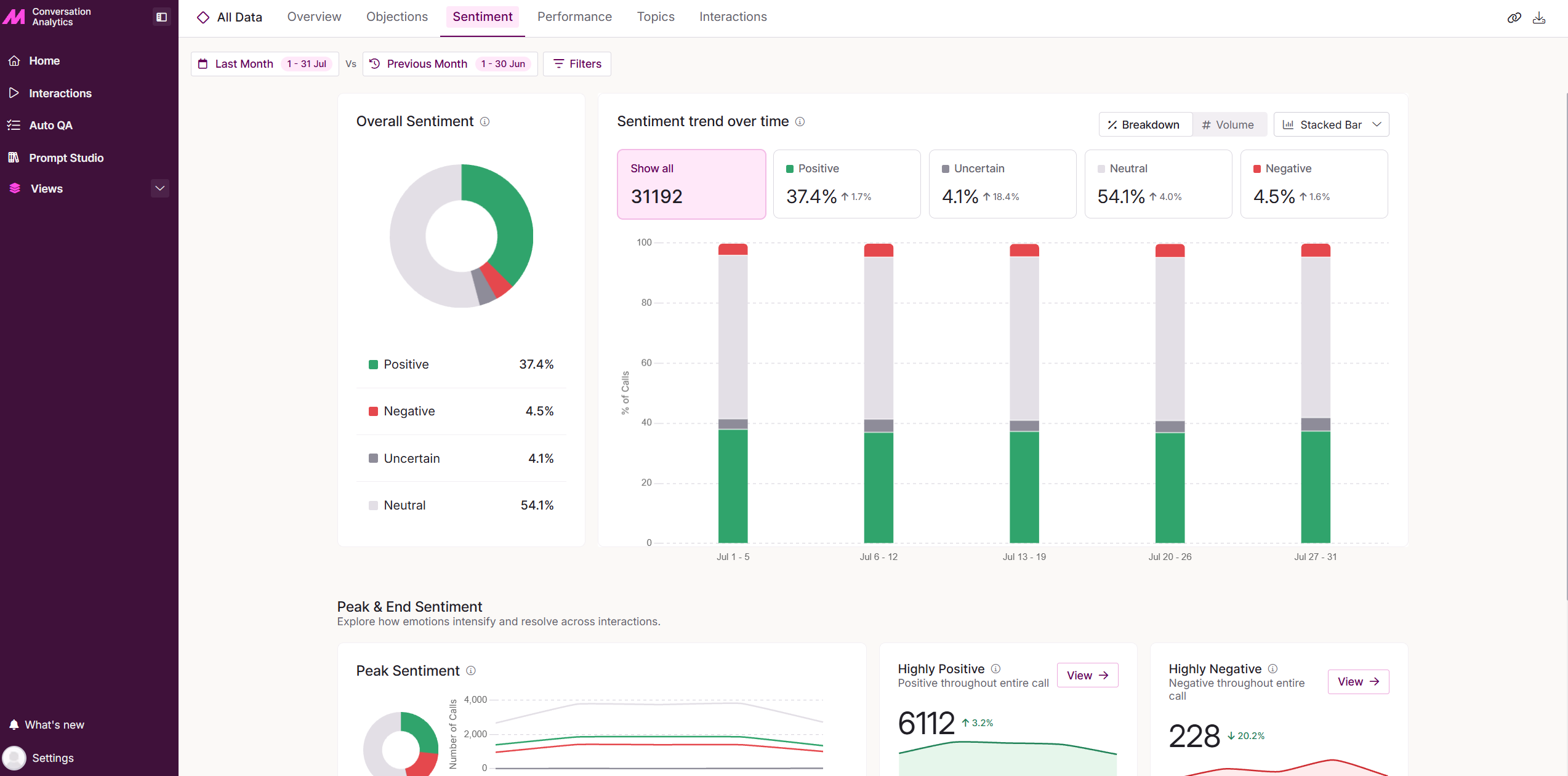
The Sentiment tab lets you review and analyse the sentiment identified across your interactions, helping you spot trends in call volume and determine the dominant sentiment over time.
Time Period and Filters bar
At the top of the page, you can adjust the date range and comparison window for the data displayed. The Filters panel lets you apply additional filters to narrow down the data and focus on specific call details. Once you've applied your filters, you can save them as a custom view. See the Views guide for more detail.
Overall Sentiment
This pie chart displays the overall sentiment identified in the interactions analysed within your selected date range and filters. Sentiment is categorised into four types:
| Sentiment | Description |
|---|---|
| Positive Sentiment | The conversation was favourable and optimistic. |
| Negative Sentiment | The conversation expressed dissatisfaction or frustration. |
| Uncertain Sentiment | The sentiment was unclear or mixed, with no definitive tone detected. |
| Neutral Sentiment | The conversation had neither a positive nor a negative tone. |
Hovering over a segment of the chart reveals more detailed trend analysis, and gives you the option to select View Interactions to review the specific calls associated with the dominant sentiment.
Sentiment trend over time
This chart lets you analyse sentiment trends over your selected date range, and can be filtered by a specific sentiment type to isolate patterns that occurred during that period.
The data can be displayed as a Stacked Bar Chart or an Area Chart, with the vertical axis configured in one of two ways:
| Axis option | Description |
|---|---|
| % Breakdown | Displays the proportion of calls by sentiment, making it easier to identify trends even when overall call volume fluctuates. |
| # Volume | Displays the number of calls by sentiment, helping you track changes in both call volume and tone. |
Peak & End Sentiment
Peak and End Sentiment show how emotions may have intensified and resolved across interactions.
| Term | Description |
|---|---|
| Peak Sentiment | The most intense emotion detected in each call. |
| End Sentiment | How each call ends emotionally. |
| Highly Positive | Calls that were positive throughout. |
| Highly Negative | Calls where both the peak and end sentiment were negative. |
| Positive Turnaround | Calls that peaked negatively but ended positively. |
| Negative Turnaround | Calls that peaked positively but ended negatively. |